
From SR&ED Lending to Replacing Consultants with AI: Garron Helman's Playbook
Timestamps
00:00:11 – Introduction to Garron Helman & GrowWise
- Mike introduces the show and his guest, Garron Helman — entrepreneur, founder of Venbridge and GrowWise, and pioneer of SR&ED financing in Canada.
- Garron built Venbridge into a market leader in just four and a half years before exiting at the peak of the 2020 market cycle.
- Today, Garron is building GrowWise — a SR&ED consultancy leveraging AI to accelerate SR&ED claims and deliver bigger refunds.
Mike Pinkus: Hi, I'm Mike Pinkus, co-founder of ConnectCPA and your host at GrowthTales. Today I sat down with Garron Helman, who's an entrepreneur and founder of Venbridge and GrowWise. Pioneer SR&ED Financing in Canada, building Venbridge into a market leader in just four and a half years, ultimately exiting the company at the peak of the 2020 market cycle. Today, Garron is building GrowWise, a SR&ED consultancy that is leveraging AI to accelerate the speed of executing SR&ED claims while garnering bigger refunds.
Mike Pinkus: I really enjoyed my conversation with Garron and I hope you enjoy this episode. Garron, you've done some impressive things in your career. A lot of them centred around SR&ED financing, which is a really interesting space. I want you to share your origin story because it's a really great one as an entrepreneur and a builder. Why don't we start at the beginning when you were helping out Espresso Capital?
00:01:05 – Garron’s Background: Espresso Capital & the Birth of SR&ED Financing
- After returning from Hong Kong, Garron was recruited to help build Espresso Capital’s SR&ED financing business in Eastern Canada.
- SR&ED financing filled a critical gap: companies received their tax credit only once a year but needed cash flow continuously.
- Helped companies delay equity rounds (protecting valuation) or bridge through a rough patch without bank debt or personal guarantees.
Garron Helman: Sure. Well, I had returned from Hong Kong, where I was running a tech company, and a buddy in Vancouver called me up and said, hey, we've started up SR&ED financing because the equity markets were tanking and a lot of tech companies needed extra cash flow to sustain themselves or grow. There was another company in Quebec doing a little bit of SR&ED financing, but some buddies called Gary and Greg were in Vancouver and had started up Espresso Capital. When I came back from Hong Kong, they asked me to join because they needed someone in Eastern Canada to build the business out here. That's where I learned all about SR&ED — I didn't even know about it prior to that.
Garron Helman: It was an interesting opportunity because there were so many companies looking for capital, and no one knew about the ability to leverage your tax credit as an asset to improve cash flow. Most people know you only get your SR&ED credit once a year — and that's tough because you're paying salary every month. Growing companies realize a couple of things: if they can delay their equity rounds, they increase their valuation and decrease dilution. Other companies just hit a bump in the road and need cash quickly — raising equity isn't really an option, and the banks won't offer debt to companies with negative cash flow and no fixed assets. So SR&ED financing was perfect for them.
Garron Helman: It really helped a lot of companies that wouldn't even be around today if it wasn't for SR&ED financing. Some companies that are quite successful — when they hit that bump in the road, SR&ED financing really helped them out.
00:03:38 – How SR&ED Financing Actually Works
- Typical loan-to-value is 75–80% of the SR&ED claim, repaid from the CRA refund within 6–12 months.
- In quarterly lending scenarios, 100% LTV is sometimes used initially and then scaled down so the refund covers the full facility.
- Mike draws comparisons to Silicon Valley Bank and CIBC’s Innovation Group in Canada.
Mike Pinkus: And Garron, just out of curiosity — how much were you guys willing to lend? Let's say someone had a claim of $100,000. Were you lending dollar for dollar of what the SR&ED refund was? How did it actually work from a financing perspective?
Garron Helman: Your typical loan-to-value is around 75 to 80%, and that's because repayment is usually within 6 to 12 months. With the interest, you want to get repaid from the tax credit refund. So if you have $100,000 in SR&ED, you loan say $75,000. When the government issues the refund — maybe $100,000 — and the interest would be, say, $10,000, the lender takes $85,000 and returns the other $15,000 to the borrower. Typically 75 to 80% LTV makes the most sense. There are times where you might go 100% — usually if you're lending on a quarterly basis, the first couple of quarters — then scale it down so when the SR&ED is refunded, it repays the entire credit facility.
Mike Pinkus: Wow. I'd love to look at the timetable of this because in the US there's Silicon Valley Bank, and the CIBC Innovation Group here in Canada lends as well. Normally one of the prerequisites is they've raised a funding round or there's someone backing the company. Were those tools mainstream at the time you were at Espresso Capital, or was there just not a lot of options overall for businesses?
00:05:51 – Alternatives to SR&ED Financing & the BDC
- The BDC was the main alternative, but required personal guarantees — a tough ask for early-stage founders.
- Tech companies rarely have fixed assets, leaving few real options beyond friends and family.
- Offering SR&ED financing without a personal guarantee was a major differentiator.
Garron Helman: The BDC has been around for a long time supporting entrepreneurs. The biggest challenge with smaller entities was that the BDC required a personal guarantee. Today it's about $250,000 to a company that might not have the best cash flow — but with a personal guarantee they'll lend the money. That's a really tricky thing for an entrepreneur to say: "Yes, I really believe in my business." All entrepreneurs are very optimistic, and they take out basically a personal loan because it is personally guaranteed. If things don't work out — which unfortunately, the majority of the time they don't — they're in a real pickle.
Garron Helman: So being able to offer SR&ED financing without a personal guarantee was a huge benefit to a lot of entities. There aren't a lot of other options because they really don't have any fixed assets — they've got a couple of desks and computers. There wasn't anything else to leverage aside from friends, family, and maybe the BDC.
00:07:36 – The Three Risks in SR&ED Lending
- Three primary risks: the people, the asset (the claim quality), and the company itself.
- The biggest real-world problem was borrowers redirecting the CRA refund cheque to themselves rather than the lender.
- A secondary risk: senior lenders calling their facility and triggering insolvency before the SR&ED refund arrived.
Garron Helman: Generally it was smooth, but there were certainly times where we had challenges. There are three primary risks for SR&ED lending. One is the people. Two is the asset. Three is the company itself. The company itself wasn't much of a risk — we did underwriting to ensure sufficient runway. We took a look at the asset — the risk being the CRA comes along and says, "That's nice you've been claiming SR&ED for five years, but we don't believe it qualifies — we're giving you a donut." That was a big problem. Fortunately, not a big issue for us, because we were quite certain the claims were quality. There were a couple of haircuts, but it didn't really affect the credit facility.
Garron Helman: The biggest issue was the people. Before all the electronic banking the CRA does now, companies would get a physical cheque. We put a lawyer in between so the cheque went to the lawyer's trust account, which would cash it to pay off the lender and send the borrower the remainder. But sometimes the borrower redirected that cheque to themselves — they purposefully, let's call it, stole the money. They felt there were other priorities. Going to knock on their door at home and say "we need our money back" was a challenge.
Garron Helman: The only other big challenge was when a more senior lender would call their credit facility. We were often subordinate to a bank with a small facility or even just a few credit cards on file. If the senior lender called their loan and put them into insolvency, it's a whole different ball game — going into receivership, you don't necessarily get the money back from the SR&ED right away. You have to go through the entire court process. I have a couple of stories there, especially one in Quebec — a nightmare to start with, but at the end of the day good for us. A very long and tedious process.
00:10:49 – From Espresso Capital to Founding Venbridge
- Espresso Capital was acquired; the buyer pivoted to SaaS-model venture lending, exiting the SR&ED financing space.
- Garron saw the gap, launched Venbridge — a more automated, tech-enabled SR&ED lender.
- Wrestled with the “fintech vs. lender” label and concluded they were a lender supported by technology — using Clearco as a cautionary fintech tale.
Mike Pinkus: Now that you've brought that up — how did you transition from Espresso Capital to Venbridge and becoming CEO, founding a company?
Garron Helman: Espresso Capital was sold. The entity that acquired Espresso Capital realized that doing SR&ED lending had a very limited market — maybe a quarter of a billion dollars a year — and it really isn't a lot of money in the big picture. What they wanted to do was grow their portfolio to half a billion or $1 billion of lending into the tech sector — SaaS-model lending, similar to what SVB was doing: complementing equity with debt, providing credit facilities based on a multiple of ARR. So Espresso Capital moved on, and that really opened up the market. I realized there weren't many other players offering SR&ED financing, and I thought it was a chance to go in and start a new business that was more automated, with better customer service, utilizing newer tools.
Garron Helman: Everyone kept asking — are you a fintech or a lender? I always struggled with that. At the end of the day you're offering a service: lending money to companies. Having a fintech bent is nice, but it's not going to make the business successful on its own. Clearco is probably the best Canadian example — a fantastic fintech, a great founding principle, then blowing up spectacularly in the marketplace. So at the end of the day, we were a lender supported by technology.
00:13:12 – Growing Venbridge: Thought Leadership & Referrals
- Leveraged existing industry reputation and hired key people to accelerate growth.
- Focused on being a thought leader — publishing useful content and offering advice beyond just capital.
- Referral partners proved far more effective than LinkedIn or Google ads; people still sell to people.
Mike Pinkus: So how did you grow Venbridge? Was it word of mouth from the network you'd built at Espresso Capital, or did you start from scratch?
Garron Helman: I was known in the industry, which was very helpful. Hired a couple of folks who were great at growing the business. I think the key is to be a thought leader. The colour of my money is the exact same as the colour of my competitor's money — so being able to show you can help customers more than just provide capital, giving advice when needed, connecting them to people, assisting in any way, is what was key. Having that thought leadership — publishing information they consumed that helped grow or sustain their business — was very, very important.
Garron Helman: A lot of other companies relied purely on LinkedIn advertising or paid methodologies. I always had the philosophy it's better to have a network of referral partners coupled with thought leadership — and that ended up being very successful. Companies' advisors would say, "Venbridge is a great solution — they're fast, efficient and fair." That was the biggest way we grew. We tried everything: Google ads, LinkedIn ads — but at the end of the day, people still sell to people, and I don't think that's going to change no matter what AI does in this world.
00:15:26 – From Corporate Leadership to Startup CEO
- Previously ran Asia-Pacific for a 600-person public company — very different from a true startup.
- Starting Venbridge from scratch was eye-opening: far more decisions, far less support structure.
- Making mistakes despite deep experience was a humbling and valuable lesson.
Mike Pinkus: Garron, was this your first role in a CEO-like position?
Garron Helman: When I was in Hong Kong and Australia, I was the CEO of the region — not CEO of the whole company. We were public, with a CEO based in Vancouver. I was basically President of Asia Pacific. It was a relatively large company — about 600 people. That was entrepreneurial in that I was able to shape a complete region within a larger entity. But it was nothing like starting from scratch with Venbridge. It was very eye-opening how much work and effort, and how many things can go wrong, when you're just by yourself or have just a partner. There are so many decisions to make. When you're president of a region for a larger company, there's so much support and talent around you. Starting from scratch, having to make all the decisions and making so many mistakes — even with a lot of experience — was very interesting for me.
00:16:47 – How Garron Spent His Time as CEO of Venbridge
- Solved the “raising vs. deploying capital” dilemma by securing two large institutional backers, freeing all his time for customers.
- Split his focus between business development / thought leadership and building technology to automate and monitor loans.
- Strong believer in replacing spreadsheets with proper database-driven platforms for tracking, security, and client monitoring.
Mike Pinkus: You became the market leader in the space. How were you spending your time — was it sales, leadership, managing all the risk of financing?
Garron Helman: Most lenders spend about 50% of their time raising money and 50% deploying it. And most have one of two problems: not being able to raise enough, or not being able to deploy enough. When I started Venbridge, knowing the experience from Espresso Capital, I decided raising capital wasn't something I wanted to spend time on — I'd rather spend it with clients on business development. So instead of raising a fund with high-net-worth individuals and family offices, I relied on two very large institutional entities that could provide as much capital as I needed. That freed me to focus entirely on customers.
Garron Helman: I probably spent too much time on technology — I love figuring out how to automate things. Every time I saw someone with Excel on their screen I'd think: why are you using Excel? There's no reason to have a spreadsheet as a productivity tool today. You really want a platform with a database, tracking, and the security that Excel just doesn't offer. So I spent most of my time either on business development and thought leadership or on the technology side — building a platform to service clients more effectively, ensure they got information as quickly as possible, and monitor loans so that if anything went a little wobbly with a company, we'd know it as soon as possible.
Garron Helman: A lot of times, lenders end up with a surprise: the company calls and says "we're closing the doors in a week." You want sufficient monitoring to understand exactly what's going on with the business month after month. We accrued the interest and it was repaid when the tax credit came in — giving companies a bit more cash — which required us to do regular monitoring. We asked for income statements and balance sheets monthly, and most were able to provide them. Being able to interact with clients on a monthly basis was very important. It ended up forming a very tight bond between us and our clients.
00:20:43 – Building Technology & the Unplanned Exit
- Technology was built to serve clients better — not as a valuation play. Garron never set out to sell.
- An unsolicited offer arrived at the perfect moment: markets peaked in late 2020 before valuations collapsed in 2021.
- Venbridge went from startup to exit in just four and a half years — rare for a services business.
Mike Pinkus: When you were building the technology, was it for a great client experience or for valuation because the plan was to exit? Did you start with the goal of exiting, or is it something that just came around?
Garron Helman: I never started with the goal of exiting. I actually thought I'd just run it into the ground somehow — a loan or two would go bad and that would be the end of the company. And frankly, that's what happens to most finance companies — if we take a look at even the SR&ED lending space, most just had a few bad loans and then gone belly up. So I never thought to exit the business. I was doing this to grow it and have happy clients. My philosophy is just do something today that's improving a little bit over what happened yesterday. So exiting was never in the picture. When someone came along and said, "We'd like to buy your business," I looked at it — it was a reasonable offer, very good timing, and worked out very well for me. But it was never up for sale. I never went looking, never had an auction. This one entity came along, wanted to buy it, and I accepted their offer after a little negotiation.
Mike Pinkus: That's the best time to sell — when you're not looking to sell.
Garron Helman: Well, the other thing is that the next quarter after we agreed on everything, the markets tanked. So it was a perfect time to sell. If I'd sold the business a year later, I'd have probably had double the revenue, but the valuation would have been the same because the multiples would have passed by then. Still the markets today have not hit the valuations they had four or five years ago.
Mike Pinkus: How long was that journey from startup to exit?
Garron Helman: It was only four and a half years. In my mind, very fast — especially for a services business. Today we see some tech companies spin up, have viral marketing happen, and within a couple of years get gobbled up. But for a services business, four and a half years from start to exit is not common. Again, not planned — just opportunistic.
00:25:37 – Lessons on Timing an Exit: Don’t Be Greedy
- Entrepreneur greed is a common pitfall — the billion-dollar IPO headlines are the exception, not the rule.
- Venture returns across North America are poor relative to other asset classes, even for sophisticated investors.
- Take the reasonable offer, put cash in your pocket, and free yourself up for the next opportunity.
Mike Pinkus: Seems like you had some instinct, Garron. I don't think you give yourself enough credit — most entrepreneurs I've spoken to get emotional about their business and it clouds their judgment when an offer comes in. You seemed pretty rational. You timed it perfectly.
Garron Helman: Yeah, but that was luck. I think entrepreneurs often get greedy — especially when you're less experienced and you see all the success stories on the newswires, the multi-billion dollar IPOs. Those are so few and far between. If you look at the venture capital data across North America — and Canada is even worse than the US — the returns for VCs are very poor relative to other asset classes. And they're the smartest folks out there investing, with deep sector knowledge. Unless you're in the 90th percentile of VCs, it's really tough out there.
Garron Helman: So the way I thought about it: if there's an offer, there's an opportunity. I happened to get lucky. But don't be greedy. Make sure you understand there are other opportunities in the future. Take what you've got on the table. It's good to put cash in your pocket and then move on to something else, rather than saying "I'm going to grow this exact same business over and over to be much more successful," because most of the time it just doesn't work out that way.
00:27:59 – Post-Exit: CEBA Arbitrage & Founding GrowWise
- After Venbridge, Garron capitalized on a CEBA repayment arbitrage by acquiring ceba.ca and seba.ca and running affiliate marketing for alternative lenders.
- Spotted SR&ED consulting as ripe for disruption using voice AI and LLMs to replace human technical interviewers.
- Built and discarded two failed platforms before arriving at the current version with paying clients and exponential AI improvement.
Mike Pinkus: What are you up to now? Can you tell us about GrowWise — what you're currently doing post-exit from Venbridge?
Garron Helman: Sure. Actually there was a little interlude post-Venbridge — and Canadians will appreciate this. We had a program called CEBA, which provided loans from the government to any company with a little bit of payroll. The CEBA program put out $50 billion of loans between $40,000 and $60,000. And they built in a strange arbitrage: if you paid back the money by a certain day, they'd forgive about a third — $20,000 out of a $60,000 loan. That's a financial arbitrage that typically doesn't happen with forgiveness or any type of credit facility. I ended up having ceba.ca and seba.ca because the government didn't buy those domains, and I offered affiliate marketing linking to all alternative lenders. That was a very interesting exercise in marketing. But I knew it would end — as soon as the repayment deadline passed, that was the end of that project.
Garron Helman: Then I looked at the SR&ED market again to understand what opportunities were there. I decided most of the consultants were working in a very legacy methodology. And I was absolutely intrigued by voice AI — this was two and a half years ago when OpenAI had just come out with their first voice model. It barely worked, but you could see the promise. I was intrigued by how an AI could really mimic a human being. So I thought it would be an opportunity to see if we could replace people with AI and do it better than a human would.
Garron Helman: SR&ED consulting is very interesting, and that's what we're doing at GrowWise. The only reason SR&ED consultants exist is that the CRA has made it sufficiently complicated to apply — you have to prove your work qualifies: show the technical challenges, the work you did, and the learnings. It's a very technical undertaking. So I started to build a platform. The first platform we built never saw the light of day — it totally failed. The voice quality was terrible, the workflow didn't make sense. This was the early days of AI; people had just barely heard of ChatGPT. I spent a lot of money and got nowhere — very disheartening. But I was absolutely convinced AI would continue to get better.
Garron Helman: So I built an MVP for the second iteration, starting from scratch. That worked relatively well, but was too narrowly focused — it only worked in a very specific workflow, not with larger entities or companies with lots of people. But on a shoestring, it showed that we could use an LLM and voice AI to substitute for a technical consultant. That was a very valuable lesson. We got a few paying clients. Then we spent more money building a proper platform with all the security, database infrastructure, and everything one would typically expect. What we see today from the LLMs is just exponential growth and quality improvements every day. I spend about 20% of my time just keeping on top of all the tools we use within our platform to make sure they're the right tools for the job.
00:36:07 – The Future of AI & Closing Thoughts
- Garron sees AI as a positive force — like the internet, it will improve efficiency rather than eliminate all jobs.
- Trust and a differentiated sales motion will be key competitive advantages as LLMs commoditize knowledge work.
- People will always sell to people — relationship and trust remain durable edges in any industry.
Mike Pinkus: Before we leave today — you're solving the problem of SR&ED with GrowWise, leveraging AI. As an entrepreneur who's been around business for a while and is at the forefront of this, what's your viewpoint five years out? Are we all in trouble? Are all jobs going away? What do you see business looking like in four to five years?
Garron Helman: I think it's a positive future. We had the same thing when the internet was invented — "it's going to take all our jobs, we're in big trouble" — whereas it just ended up improving efficiency. I think AI is also going to improve efficiency, and we'll find other opportunities to employ people. People still sell to people. So the world of consulting — accounting, law, SR&ED consulting — is going to change significantly. But you're always going to have people selling to people. I don't think LLMs are going to change that, because LLMs are just going to make everyone have very similar tools. You have to differentiate yourself — through a sales motion that's different from others.
Garron Helman: The second thing is that trust is going to be incredibly important. What everyone appreciates today is that these LLMs can generate fake content, they can hallucinate, they can give you information that doesn't even exist. It's a very challenging atmosphere — especially from a business perspective when you're relying on this to submit a tax form or provide legal advice. Whatever you're doing needs to be grounded in fact, in reality. So companies that are trusted and have a fantastic go-to-market strategy will be in order to be successful. There will be fewer people in some industries like software development, because LLMs are going to do that so much better. But being able to harness the power of the LLMs, synthesize it, and work that into a business strategy is still going to be key for any type of service. So I don't think we're in trouble — I think it's just going to be more efficient. We'll get clients information faster, and it's going to be better information.
Mike Pinkus: I want to take that same optimistic view. You're at the forefront of it, and I can tell you have a passion for it — the fact that you are using AI in the early days at GrowWise is really, really cool. I want to thank you for taking so much time out of your day to share your story — not only about Espresso Capital and Venbridge, but you've built great companies and continue to build great companies. I do appreciate you taking so much time.
Garron Helman: Thanks very much, Mike. It's a pleasure to be here.
Mike Pinkus: Thanks so much. Take care.
Meet Our Host

Mike Pinkus
Mike Pinkus
Mike is a seasoned professional with a diverse background in taxation, financial reporting, investments, and real estate. Before co-founding ConnectCPA, he served as a Senior Associate at PricewaterhouseCoopers, specializing in advising small and medium-sized businesses. Additionally, Mike gained experience as a tax and accounting manager at a mid-sized accounting practice and as an Investment Associate at a real estate private equity firm. He holds a Bachelor of Business Administration degree from Schulich School of Business and is a Chartered Accountant.

Meet Our Guest(s)
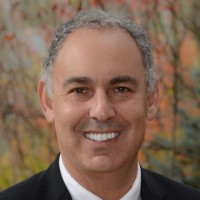
Garron Helman
Garron Helman
Garron Helman is the founder and CEO of GrowWise, an AI-powered SR&ED consulting platform that uses voice AI and LLMs to replace the traditional human-led technical interview process for Canadian R&D tax credit claims. A serial entrepreneur with deep roots in the alternative lending space, Garron previously founded Venbridge, a SR&ED financing company he built from the ground up and successfully exited in just four and a half years - timing the sale at the peak of the market in late 2020. Before Venbridge, he helped build out Espresso Capital's Eastern Canadian operations, pioneering SR&ED-backed lending for tech companies that couldn't access traditional debt financing. Earlier in his career, Garron ran the Asia Pacific region for a publicly traded tech company based in Hong Kong, scaling operations across 600 employees. At GrowWise, he's applying his lending-era thought leadership approach to a new frontier - using AI as a substitute for the technical consultants who have historically gatekept the SR&ED claim process for small and mid-sized businesses.
